
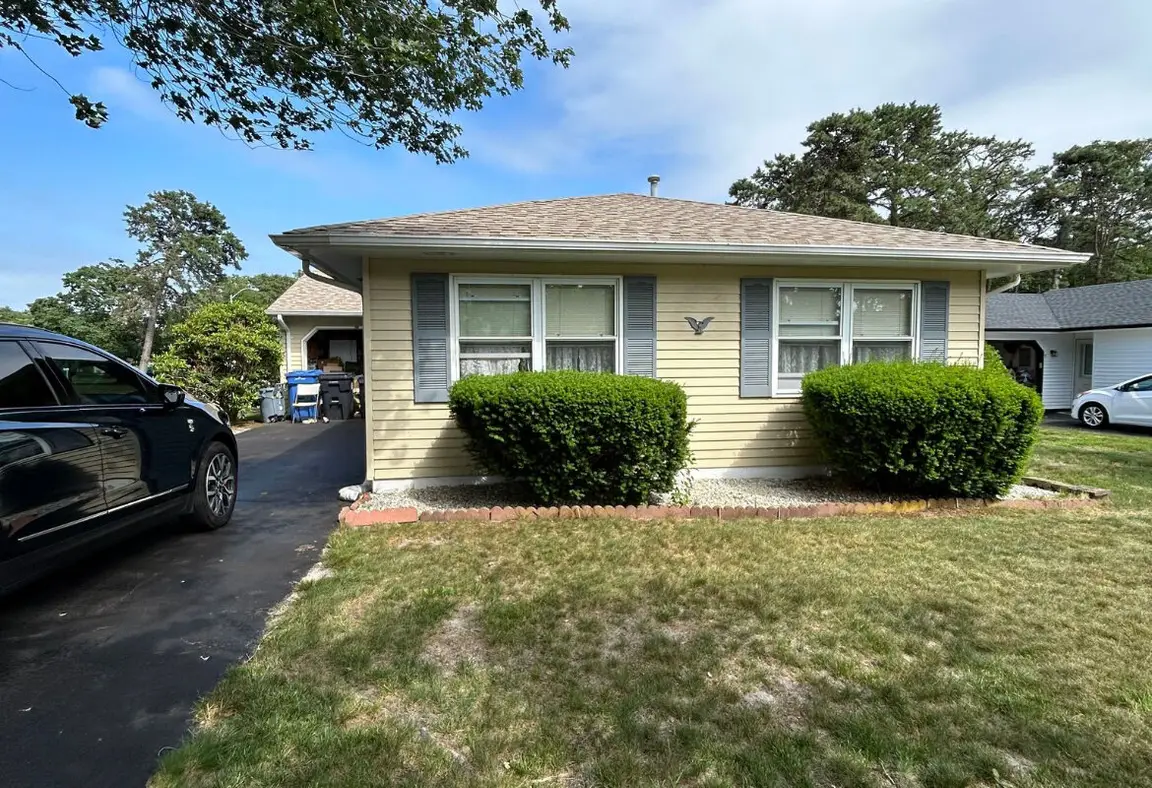
When a marriage ends, the house is often the biggest asset and the hardest decision. One of you may want to stay, neither of you may be able to afford it alone, or you may both just want a clean break. This guide explains how Pennsylvania law treats the marital home, what you can and can’t do with it while the divorce is pending, the tax rules worth knowing, and how selling as-is can work for homeowners in Philadelphia and the surrounding counties.
I’m Nick Maccini, a local Philadelphia investor and the founder of Nick Buys Houses. We’ve done 400+ deals since 2020. I’m not an attorney or a tax advisor, and a divorce is a legal process, so please get advice from a family law attorney. What I can do is explain the official rules and how a sale works. If you’d like to talk, call (215) 792-3189.
Is the house marital property?
Usually, yes. Pennsylvania’s Divorce Code defines marital property as property either spouse acquired during the marriage, with some exclusions, such as property acquired before the marriage or by gift or inheritance. Property acquired during the marriage is presumed to be marital regardless of whose name is on the title, including property held as joint tenants, tenants in common, or tenants by the entireties (23 Pa.C.S. § 3501).
Philadelphia’s Family Court divorce brochure puts it plainly: marital property includes a house “regardless of whose name is on the deed or mortgage.” It also notes that an increase in value during the marriage of property a spouse owned before the marriage, or inherited, can be marital, and that debts are part of the marital estate too (Divorce in Philadelphia County).
How Pennsylvania divides the home
Pennsylvania uses equitable distribution. The court divides marital property “in such percentages and in such manner as the court deems just,” without regard to marital misconduct (§ 3502(a)). The brochure stresses that equitable means fair, and it doesn’t necessarily mean 50-50.
Among the factors the statute lists, three matter a lot for the house:
- The federal, state, and local tax consequences of dividing each asset (§ 3502(a)(10.1)).
- The expense of selling, transferring, or liquidating an asset (§ 3502(a)(10.2)).
- Whether a party will be the custodian of dependent minor children (§ 3502(a)(11)).
The court can also award one or both spouses the right to live in the marital residence while the case is pending (§ 3502(c)), and on request it can order an interim partial distribution of marital property at any stage (§ 3502(f)). If a party doesn’t comply with an equitable distribution order or with an agreement between the parties, the court can, among other remedies, order the transfer or sale of property (§ 3502(e)(4)).
Can you sell the house before the divorce is final?
Often the cleanest path is for both spouses to agree to sell and put the terms in writing. The Philadelphia brochure explains that spouses can work out property issues in a Property Settlement Agreement. What you shouldn’t do is try to move the house out of reach: if a spouse is about to dispose of or encumber property to defeat equitable distribution or support, the court can issue an injunction to stop it, and a transfer of marital property to a third party for wholly inadequate consideration may be declared void (§ 3505(a) and (e)).
In practice, a buyer and the title company will want everyone with an ownership interest to sign, and your attorneys will want the sale and the split of the proceeds documented. Talk to your lawyer before you sign an agreement of sale.
If you’re already divorced and still own it together
Married couples in Pennsylvania commonly own their home as tenants by the entireties. Under § 3507, once divorced, they hold it as tenants in common with equal one-half shares, unless a court order says otherwise, and either one can bring an action to have it sold and the proceeds divided. After the expenses of sale, the proceeds are split equally; liens against both are paid from the total, and a lien against just one is paid from that person’s share. Under § 3508, either former spouse can deed their interest to the other without the other’s signature.
How long a Pennsylvania divorce takes
Timing affects when you can sell or refinance. Pennsylvania’s main no-fault grounds are in 23 Pa.C.S. § 3301:
- Mutual consent: the marriage is irretrievably broken, 90 days have passed since the action began, and both spouses file an affidavit of consent (§ 3301(c)).
- Irretrievable breakdown: the spouses have lived separate and apart for at least one year and the marriage is irretrievably broken (§ 3301(d)).
Per the brochure, you can file in Philadelphia if either spouse lived in Pennsylvania for the six months before filing and either spouse lives in Philadelphia, or you agree to file there. Complaints are filed with the Clerk of Family Court at 1501 Arch Street, 11th Floor.
Tax rules worth knowing
Federal tax rules can change the math, so confirm them with a tax professional. From IRS Publication 523 and Publication 504:
- If you qualify, you may exclude up to $250,000 of gain on the sale of your main home, or $500,000 for a married couple filing jointly.
- Generally, transferring your home or your share of it to a spouse or ex-spouse as part of a divorce settlement is treated as no gain or loss.
- A transfer counts as incident to divorce if it happens within one year after the marriage ends, or is related to the end of the marriage (made under the divorce or separation instrument and within six years).
- If your spouse transferred the home to you, you can count the time your spouse owned it as time you owned it, but you must meet the residence requirement on your own.
- If you’ve moved out but still own the home, you can treat it as your residence while your spouse or former spouse is allowed to live there under a divorce or separation instrument and uses it as their main home.
Your main options for the house
- One spouse keeps it and buys out the other, often by refinancing. Ask your lender what it takes to remove a spouse from the loan.
- List it on the market. This can bring the highest price, but it usually means repairs, showings, and agreeing on every decision while you’re splitting up.
- Sell as-is for cash. This trades some price for speed and simplicity: no repairs, no showings, and a fixed settlement date both of you can plan around.
How a cash as-is sale works with us
Here’s the short version (full details on How We Buy Houses):
- Either spouse, or your attorneys, can contact us by phone at (215) 792-3189 or through our cash offer form.
- We look at the property as it is.
- We make one cash offer in writing, so both of you are looking at the same number. There’s no obligation.
- If you both accept, we can close within 7 days of clear title. Most sales close within 30 days from start to finish.
We buy as-is, we pay the settlement costs, and we can help with moving costs when needed. We buy in Philadelphia, Bucks, Montgomery, Delaware, and Chester counties, and in nearby Pennsylvania, New Jersey, and Delaware counties.
Working with Nick was a pleasure from start to closing. Everything went smoothly and he was available for any questions I had. Would definitely work with him again.
Melissa s, Google review
Selling a house during divorce: FAQ
Is the house marital property if only one spouse is on the deed?
Often, yes. Under 23 Pa.C.S. § 3501, property acquired during the marriage is presumed marital regardless of how title is held. Property owned before the marriage or received by gift or inheritance can be excluded, but an increase in its value during the marriage may be marital.
Does Pennsylvania split the house 50-50 in a divorce?
Not automatically. Pennsylvania uses equitable distribution, which means a fair division based on factors in 23 Pa.C.S. § 3502, such as each spouse’s income, needs, and contributions, tax consequences, the cost of sale, and who will have custody of minor children.
Can we sell the house before the divorce is final?
Yes, if you both agree and document it, often in a Property Settlement Agreement. A court can stop one spouse from disposing of marital property to defeat equitable distribution, so talk to your attorney before signing an agreement of sale.
What happens to a jointly owned house after a Pennsylvania divorce?
Under 23 Pa.C.S. § 3507, property held as tenants by the entireties becomes a tenancy in common with equal shares, unless a court order says otherwise. Either former spouse can seek a court-ordered sale, and proceeds are split equally after sale expenses and liens.
Who pays the settlement costs if we sell to you?
We do. We pay the settlement costs, buy as-is, and can close within 7 days of clear title, which gives both spouses a firm date to plan around.
This article is general information, not legal or tax advice. For advice about your divorce or your taxes, talk to a family law attorney or a tax professional. Details were checked on November 4, 2026, from the official sources linked above, and they can change.
Get an as-is cash offer
Call (215) 792-3189 or request a no-obligation cash offer online. You can also learn more about me or read our FAQ.
Related pages
- How we buy houses · Get a cash offer · FAQ
- We buy houses in Philadelphia · All areas we serve
- Behind on property taxes in Philadelphia · Selling a house that needs repairs